Join the Good Sam CLub - Click Here!
link to RVbasics.com website

 
Good Sam Roadside Assistance  

Archive for the ‘Safety’ Category

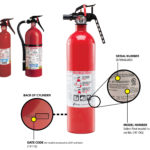
All recreational vehicles must carry at least one dry chemical or carbon dioxide (CO2) type extinguisher in working condition with a rating of at least 4-B. The most effective fire extinguishers use halon gas and are good investments for RV safety. It can keep a small, manageable fire from becoming a major, uncontrollable fire.

The best fire protection includes:

  • Proper maintenance and inspection of fuel systems and electrical equipment
  • A properly installed and working smoke detector
  • A properly installed and working LP gas detector.

Make sure the fire extinguisher is suitable for the type of fire and it is large enough to put out the fire. If you have a fuel or electrical fire, first try to shut off the source of the fuel. Turn off the fuel valves and unplug the electrical circuits. If you aren’t sure, shut off everything.

All family members should be able to put out a small gas or oil fire with the extinguisher.

The most common extinguisher is a 2 1/2 lb. ABC which is suitable for all types of fires, including fuel fires and electrical fires. There is no substitute for the correct type of fire extinguisher. The letter designates the type of fire suitability:

  • A—ordinary materials like wood and paper
  • B—petroleum products such as gasoline, propane kerosene
  • C—electrical

Be sure to recharge the extinguisher after it is used, even if it is not totally empty. Conventional CO2 extinguishers should be recharged periodically even if they are not used. The dry powder used in CO2 extinguishers tends to compact with road vibration. Before using it, rap the CO2 extinguisher sharply on its side and bottom to shake the powder loose.

Put the extinguishers where fires are more likely to occur and where they can be easily reached. For example, with a tow vehicle and travel trailer, you should have one in the tow vehicle and another near the kitchen in the trailer.

You may also want to read: RV Fire! Be Aware of the PossibilityHow to Reduce the Risk of an RV Fire
& RV Propane Safety Tips

RVing by definition is supposed to be recreational. Ideally we should only be driving our RVs when the weather is fair. But if you RV long enough you’re going to run into bad weather. You may be able to control an RV in bad weather, but the safest thing to do would be to pull over and wait it out. Here are some tips for RVing in extreme wether.

Driving Your RV in High Winds
If you are driving in areas with strong winds, take special care. Crosswinds are the greatest threat because they can push a large motor home or a vehicle/trailer combination into another lane if you are not prepared. While fifth wheel RVs are affected by high crosswind it is especially true for travel trailers.

In most cases, driving slower is the best defense against strong winds. If you are towing a trailer, you should gradually apply the trailer brakes to help control a swaying trailer. Headwinds require a heavier throttle to maintain usual speeds.

If you anticipate driving in very windy areas, call and obtain local weather and road conditions. Good sources of weather information are local airports, highway patrols, state police, or ranger stations. Often, you will see signs along the highway which show radio frequencies for weather information.

Driving your RV in Snow
Always carry drive wheel and trailer wheel chains when you travel in snow country. Learn how to put them on before you need them. Chains are needed for both the tow vehicle and for one axle of a trailer. If you have a motor home with dual-rear wheels, you will need chains for one tire on each side.

Driving your RV on Ice
If you are towing a trailer on icy roads, go slowly, especially downhill. Use the lower gears. You may be able to gain additional traction for the tow vehicle by moderately releasing the tension of the load equalizing hitch to put more weight on the drive axle of the tow vehicle. Remember to readjust the hitch after the icy road condition has passed or vehicle stability may be affected during normal driving conditions.